

Automatic Sliding Glass Door Controller Solution for Smart Entrance Systems
Automatic sliding glass doors have become a standard entrance solution in modern commercial and public buildings. From shopping malls and hospitals to office buildings and airports, these systems provide convenient, touch-free access while improving operational efficiency and safety.
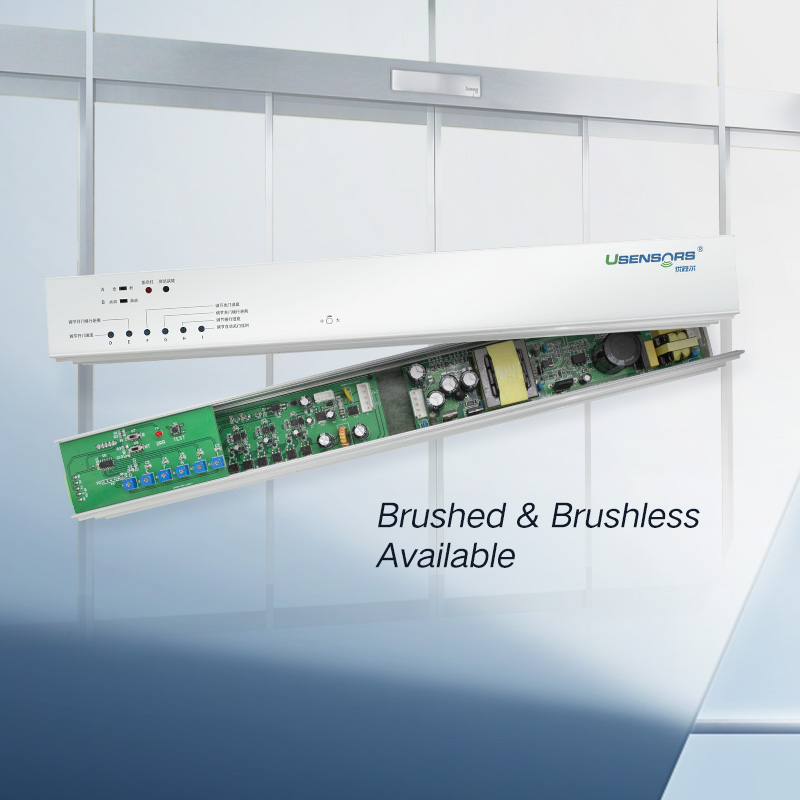
At the heart of every automatic sliding door system is the automatic sliding glass door controller. This intelligent control unit manages signals from sensors, safety devices, and access control systems to coordinate the movement of the door operator. By processing input signals and controlling the motor drive, the controller ensures smooth, reliable, and safe door operation.
This article introduces how an automatic sliding door controller works, its key features, and how it integrates with sensors and automation systems to create a complete entrance solution.
What Is an Automatic Sliding Glass Door Controller?
An automatic sliding glass door controller is the central control module of an automatic door operator system. It receives signals from activation devices such as motion sensors, push buttons, or access control systems and then controls the motor to open or close the sliding door panels.
The controller functions as the “brain” of the door automation system. It continuously monitors system inputs, evaluates safety conditions, and manages the operating parameters of the motor and drive mechanism.
Typical tasks performed by the controller include:
Receiving activation signals from sensors or access devices
Controlling motor direction and speed
Managing opening and closing timing
Monitoring safety sensors to prevent accidents
Adjusting operational parameters for different environments
With advanced microprocessor technology, modern controllers can provide precise motion control and reliable system performance even in high-traffic environments.
Automatic Sliding Door System Architecture
A typical automatic sliding glass door system includes several key components that work together to ensure efficient operation.
Core Components
Automatic Sliding Door Controller
The central processing unit responsible for system logic and motor control.Door Operator Motor
Usually a brushless DC motor that drives the belt or gear system to move the door panels.Motion Detection Sensors
Microwave or radar sensors detect approaching pedestrians and trigger the door to open.Safety Sensors
Infrared presence sensors or photocell beams prevent the door from closing when someone is in the doorway.Door Panels and Track System
Glass panels slide smoothly along a track mechanism controlled by the motor.Optional Access Control Devices
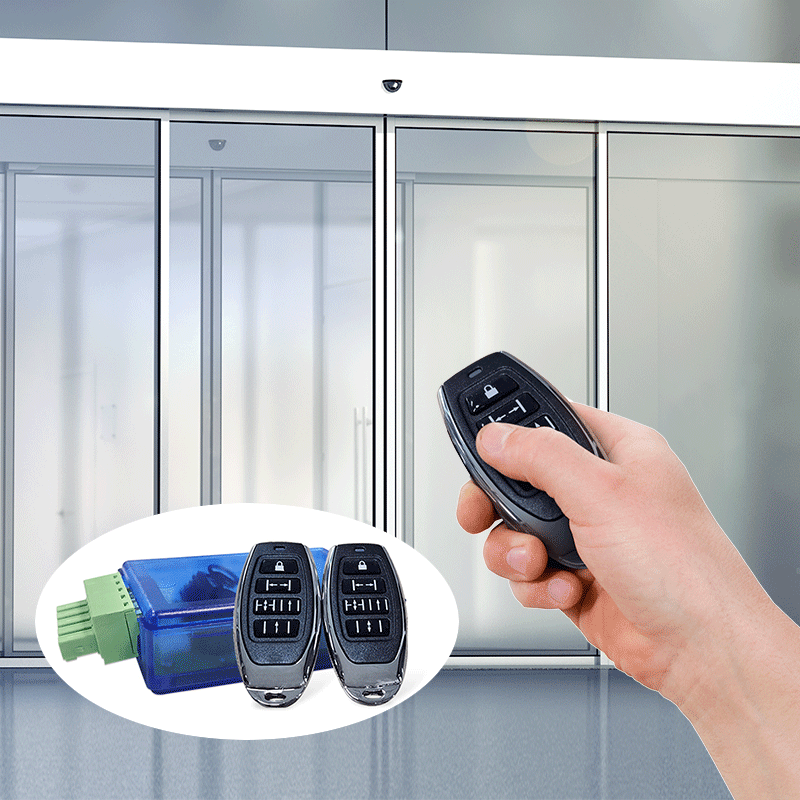
Card readers, keypads, fingerprint scanners, or wireless push buttons.
System Workflow
The operation process of an automatic sliding door system typically follows these steps:
A motion sensor detects a person approaching the entrance.
The sensor sends a signal to the automatic sliding door controller.
The controller activates the motor and drive belt.
The sliding door panels move open smoothly along the track.
After a preset hold-open time, the controller closes the door automatically.
Safety sensors monitor the doorway and prevent accidental closing.
This intelligent coordination between sensors, controller, and motor allows the door system to operate safely and efficiently.
Key Features of an Automatic Sliding Door Controller
Modern automatic door controllers are designed with advanced electronic and safety features to meet the requirements of commercial and industrial buildings.
Intelligent Microprocessor Control
The controller uses a high-performance microprocessor to analyze signals from sensors and manage door movement. This intelligent control system enables precise timing, smooth acceleration, and accurate motor positioning.
Compared with traditional analog controllers, digital controllers offer higher reliability and improved operational stability.
Adjustable Operating Parameters
Different installation environments require different door operating speeds and timing settings. An automatic sliding door controller typically allows adjustment of parameters such as:
Door opening speed
Door closing speed
Hold-open time
Motor force and sensitivity
Sensor trigger delay
These configurable settings make the system adaptable to various entrance scenarios, including high-traffic areas.
Multi-Device Integration
One of the major advantages of an automatic door controller is its ability to integrate with multiple external devices.
Common compatible devices include:
Microwave motion sensors
Infrared safety sensors
Wireless RF push buttons
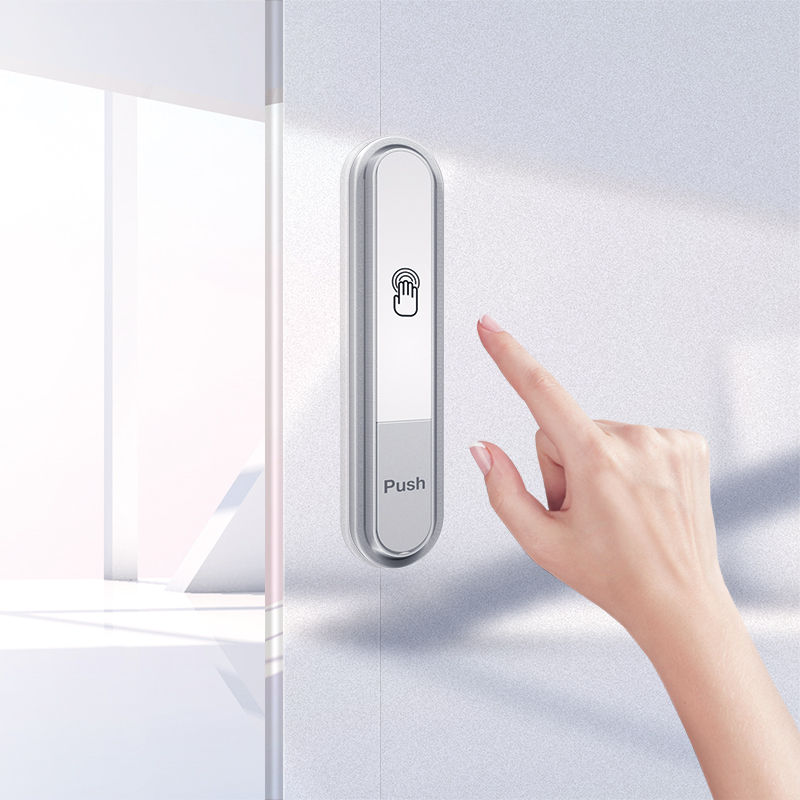
Touchless exit switches
Access control systems
Building automation systems
This integration capability allows the automatic door system to function as part of a larger smart building infrastructure.
Advanced Safety Protection
Safety is a critical requirement for automatic door systems. A well-designed sliding door controller includes multiple safety protection mechanisms.
Typical safety features include:
Obstacle detection and auto-reverse function
Safety beam monitoring
Emergency stop control
Motor overload protection
Soft start and soft stop operation
These safety mechanisms ensure that the door operates smoothly while protecting pedestrians and preventing damage to the equipment.
Energy Efficiency and Environmental Control
Automatic sliding doors help reduce energy loss in buildings by keeping entrances closed when not in use. The controller plays an important role in energy management by precisely controlling the opening duration and closing timing.
By minimizing unnecessary door opening and reducing air leakage, automatic door systems contribute to improved indoor climate control and lower energy consumption.
Applications of Automatic Sliding Door Controllers
Automatic sliding glass door controllers are widely used in many industries due to their convenience and reliability.
Commercial Buildings
Shopping malls, supermarkets, and office buildings rely on automatic sliding doors to manage large numbers of visitors. The controller ensures smooth operation and reduces congestion at entrances.
Hospitals and Healthcare Facilities
Hospitals require hands-free access for medical staff, patients, and equipment transport. Automatic sliding doors controlled by intelligent systems provide hygienic, touch-free entry.
Hotels and Restaurants
Hotels often use automatic sliding glass doors to create a modern and welcoming entrance while maintaining efficient temperature control inside the building.
Airports and Transportation Hubs
Airports and train stations experience heavy pedestrian traffic. Automatic door systems with reliable controllers help maintain continuous and safe movement of passengers.
Industrial Facilities
Factories and logistics centers use automatic sliding doors to improve operational efficiency and ensure smooth access for workers and equipment.
Advantages of Using an Automatic Sliding Door Controller
Installing a modern automatic sliding door controller offers several significant advantages for building owners and facility managers.
Improved User Convenience
Automatic doors allow people to enter and exit buildings without physical contact, improving accessibility and user experience.
Enhanced Safety
Integrated safety sensors and intelligent control logic prevent accidents and ensure safe operation for pedestrians.
Flexible System Integration
The controller can connect with various sensors, access control systems, and automation platforms, enabling customized solutions.
Reduced Maintenance Costs
Advanced electronic control improves reliability and reduces wear on mechanical components, leading to lower maintenance requirements.
Professional Building Image
Automatic sliding glass doors create a modern and professional appearance for commercial buildings and public facilities.
Installation and Configuration Recommendations
For optimal performance, proper installation and configuration of the automatic sliding door controller are essential.
Key recommendations include:
Install sensors at appropriate heights and angles for accurate detection.
Ensure proper wiring and signal connections between controller and devices.
Adjust motor parameters based on door size and weight.
Test safety sensors and obstacle detection functions before operation.
Perform regular system maintenance to ensure long-term reliability.
Professional installation and proper system configuration can significantly improve the stability and lifespan of the automatic door system.
Future Trends in Automatic Door Control Systems
As smart building technology continues to evolve, automatic sliding door controllers are becoming more advanced. Modern systems are increasingly integrating with:
IoT-based building management systems
Remote monitoring and diagnostics
Smart access control solutions
Energy management platforms
These innovations allow building operators to monitor door performance, detect faults remotely, and optimize energy usage across the entire facility.
Conclusion
The automatic sliding glass door controller is a critical component in modern automatic entrance systems. By coordinating sensors, safety devices, and motor drives, the controller ensures smooth, safe, and efficient door operation.
With intelligent microprocessor technology, flexible configuration options, and strong compatibility with access control systems, automatic sliding door controllers provide a reliable solution for a wide range of applications, including commercial buildings, hospitals, transportation hubs, and industrial facilities.
Implementing a high-quality automatic sliding door controller not only improves building accessibility but also enhances safety, energy efficiency, and overall user experience.
Related Article


Contact Information
Add: No.991 Xingxiu Road,Taiwanese Investment Zone, Quanzhou, Fujian Province,P.R.China
Tel: +86 136 1606 8720
E-mail: qn010@qinuo.net